• Skip to main content

Halvarden

Learn. Think. Grow.

  • Courses
  • Services
    • Advisory
    • Consultancy
    • Research
    • Training
  • Insights
  • About
  • Contact

General

The Body in the Room

3 June, 2026 by Halvarden

Embodied cognition, physiological state, and what professional judgement actually runs on.

The dominant model of professional judgement is essentially computational: a mind processes information, weighs evidence, applies rules and training, and produces a decision. The body, on this account, is a delivery mechanism, it transports the mind to the meeting, the ward, the courtroom, the home visit. What happens in the body during the professional encounter is largely irrelevant to what happens in the mind.

The research on embodied cognition suggests this model is wrong in ways that have direct consequences for professional practice. The mind does not operate independently of the body. Physiological state, arousal, fatigue, hunger, physical discomfort, the felt sense of threat, shapes cognition in ways that are not peripheral to professional judgement but constitutive of it. The body is not the delivery mechanism for the mind. It is part of the cognitive apparatus.

What embodied cognition means

Embodied cognition is not a single theory but a family of related positions, united by the claim that cognitive processes are not confined to the brain but are shaped by the body’s physical states, its sensorimotor experience, and its interaction with the physical environment. The field draws on the foundational work of philosophers including Maurice Merleau-Ponty, whose phenomenology of the body-subject argued that perception and cognition are inherently corporeal, we perceive and think as embodied beings, not as disembodied minds that happen to inhabit bodies.

The neuroscientific case for embodied cognition has been advanced most influentially by Antonio Damasio, whose somatic marker hypothesis proposed that emotional and bodily states are not separable from rational decision-making. Patients with damage to the ventromedial prefrontal cortex retained intact cognitive abilities, their reasoning, memory, and language were unimpaired, but lost the capacity to make effective decisions. The critical deficit was the loss of somatic markers: bodily signals that tag options with emotional valence, enabling the rapid narrowing of decision space that effective real-world judgement requires. Without the body’s input, rational deliberation alone was insufficient.

Stress, threat, and the narrowing of professional thinking

The most practically significant dimension of embodied cognition for professional practice is the relationship between physiological arousal and cognitive function. Under conditions of acute stress, the fight-or-flight response mediated by the sympathetic nervous system, cognitive resources are reallocated. Attention narrows to salient threats. Working memory capacity is reduced. Cognitive flexibility, the ability to consider multiple perspectives, hold conflicting information in mind, and generate novel responses, is impaired. The organism prioritises rapid, decisive action over deliberate, nuanced analysis.

These effects are adaptive in contexts of genuine physical threat. They are maladaptive in contexts that require the kind of complex, multi-dimensional professional reasoning that demanding professional roles require. And the conditions that produce physiological stress in professional settings, high-stakes decisions under time pressure, difficult interpersonal encounters, the management of distressing information, accumulated caseload demand, are precisely the conditions under which professional judgement is most consequential.

Research on stress and professional decision-making across clinical settings has found consistent effects: clinicians operating under acute stress show reduced diagnostic accuracy, greater reliance on heuristic shortcuts, and reduced attention to disconfirming information. The broader literature on physician burnout reviewed by Panagioti and colleagues in JAMA Internal Medicine documents systematic associations between clinician stress, burnout, and patient safety outcomes. The implication is not that stressed clinicians are failing as professionals. It is that physiological state is a variable in clinical performance that professional systems need to acknowledge and address.
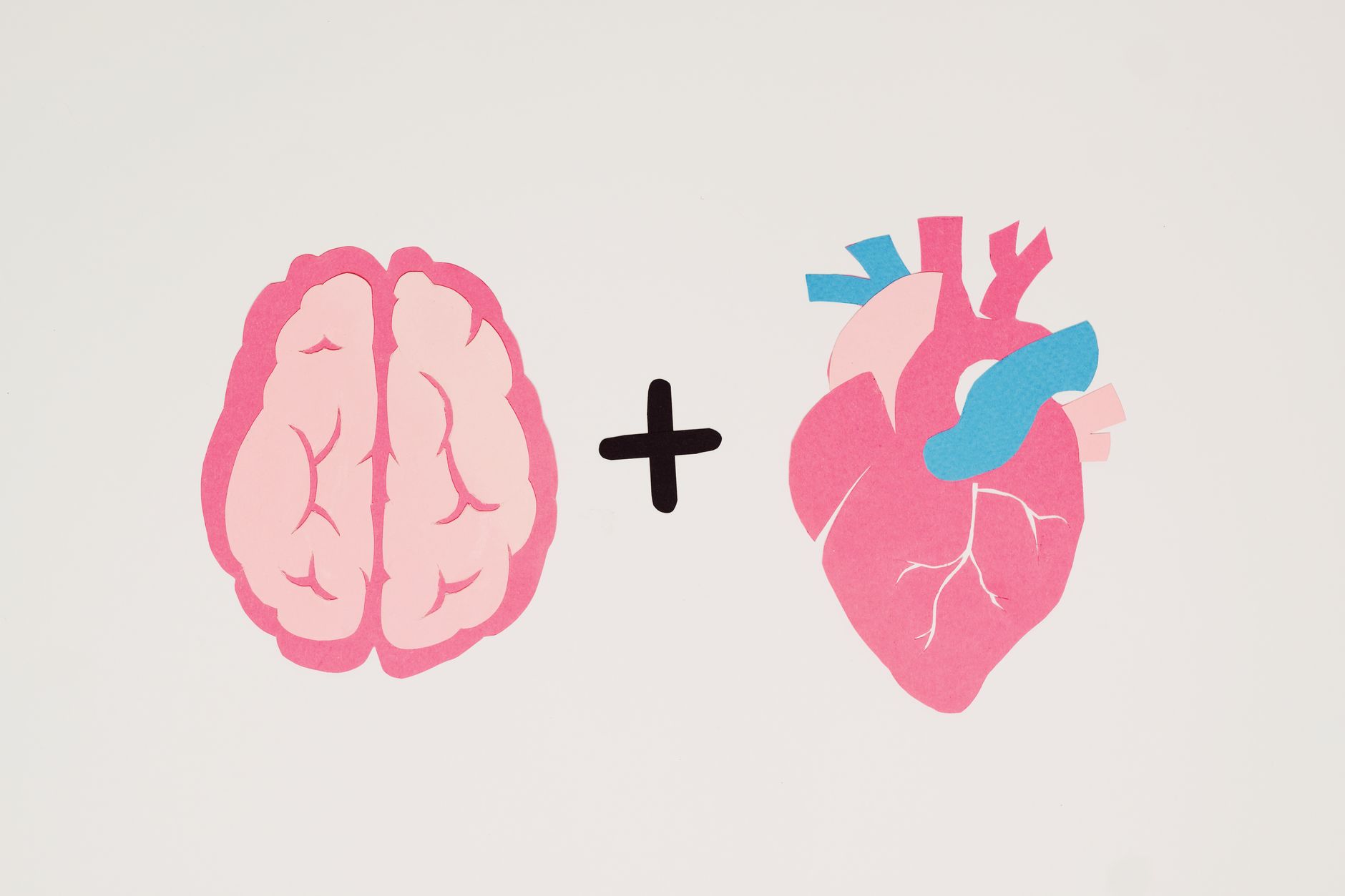
brain and heart symbols on white background

The professional encounter as a dyadic embodied event

Professional judgements do not take place in isolation. They take place in encounters, between a professional and a client, patient, family, or colleague. And encounters are embodied events in which the physiological states of both parties interact.

The research on interpersonal synchrony, the unconscious coordination of physiological rhythms, movement patterns, and emotional states between people in interaction, has direct implications for how professional encounters should be understood. Practitioners who are physiologically dysregulated, aroused, fatigued, or in a state of stress, are less likely to achieve the kind of synchronised attunement that supports effective professional relationships.

George Lakoff and Mark Johnson’s influential work Metaphors We Live By (1980) demonstrated that conceptual thought is grounded in embodied experience, that abstract concepts are understood through bodily metaphors rooted in physical experience. The professional who describes a situation as ‘heavy,’ a client as ‘hard to reach,’ an organisation as ‘rigid’ is not merely using convenient shorthand. They are thinking through embodied conceptual structures that shape what is salient, what is possible, and what is appropriate.

Simulation semantics and understanding people

Lawrence Barsalou’s theory of perceptual symbol systems proposes that concepts are patterns of neural activation in sensorimotor systems, simulations of perception and action, grounded in bodily experience. To understand what it means for someone to be in pain, afraid, or confused is not to retrieve a definition. It is to run a partial simulation of that state in one’s own sensorimotor systems.

The simulation account of understanding has a direct implication for how professionals understand service users, clients, and patients. Empathic understanding is not a purely cognitive achievement. It is an embodied one. And it is an achievement that is impaired when the practitioner’s own physiological and emotional state occludes the simulation. The literature on vicarious trauma and compassion fatigue, reviewed comprehensively by Figley in Compassion Fatigue, documents the ways in which sustained exposure to the distress of others alters the practitioner’s own physiological and affective baseline. The consequences are not merely emotional. They include the degradation of the cognitive capacities, attention, working memory, cognitive flexibility, perspective-taking, that professional judgement requires.

What this means for professional practice

The practical implications of embodied cognition for professional practice are specific and actionable, though they require a shift in how professional effectiveness is understood.

First, physiological state is a professional variable that practitioners and organisations need to manage, not ignore. The practitioner who arrives at a complex home visit after six consecutive highly demanding appointments is not simply tired. They are cognitively diminished in ways that affect the quality of their professional judgement. Supervision that attends only to case decisions and not to the practitioner’s physiological and emotional state is attending to the output of the system while neglecting the condition of the system that produces it.

Second, the regulation of physiological state is a professional skill. The growing body of evidence on brief mindfulness practices, regulated breathing, and physiological reset techniques demonstrates that practitioners can learn to modulate their physiological state in ways that restore the cognitive capacities that stress impairs. This is not wellness advocacy. It is a cognitive performance argument grounded in the neuroscience of embodied cognition.

Third, the design of professional environments should reflect what the research reveals about the conditions for good professional thinking. Environments that are physically uncomfortable, visually cluttered, or designed for throughput rather than reflection actively impair the kind of reasoning they are meant to support.

Fourth, the professional encounter itself should be understood as a dyadic, embodied event in which the quality of attunement between practitioner and client is a significant variable in outcome. This is relevant across all professional disciplines that have historically understood themselves as primarily informational or procedural, law, social care, medicine, not only in therapeutic traditions.

The professional case for taking the body seriously

The claim that professional judgement is partly constituted by bodily states may seem to threaten the idea of professional objectivity. The better response to this concern is not to deny the embodied basis of cognition but to insist that recognising it is what professionalism requires.

A professional who operates as if their judgement is entirely independent of their physiological state is not being objective. They are being inaccurate about the conditions of their own cognition. A professional who recognises that physiological state is a variable in professional performance, and takes active steps to manage it, is doing what the evidence requires.

The research tradition from Damasio to Barsalou, and the accumulated evidence on stress, burnout, vicarious trauma, and interpersonal synchrony, constitutes a coherent and practically significant account of what professional judgement actually runs on. Taking that account seriously is not a departure from professional standards. It is what meeting them honestly requires.

Further reading

Damasio, A. (1994). Descartes’ Error: Emotion, Reason, and the Human Brain. Putnam.

Lakoff, G., & Johnson, M. (1980). Metaphors We Live By. University of Chicago Press.

Panagioti, M. et al. (2018). Association between physician burnout and patient safety. JAMA Internal Medicine, 178(10).

Figley, C. R. (Ed.) (1995). Compassion Fatigue. Routledge.

Barsalou, L. W. (1999). Perceptual symbol systems. Behavioral and Brain Sciences, 22(4).

Filed Under: General

The Argument You Didn’t Know You Were Making

27 May, 2026 by Halvarden

Toulmin’s model, professional fallacies, and the structure of reasoning that actually works.

Every professional recommendation is an argument. Every risk assessment is an argument. Every advice note, care plan, referral letter, and board report is an argument, a set of statements in which some are offered as reasons to accept or act upon others. The problem is that most professional training does not teach argument. It teaches content, the knowledge and skills relevant to a professional domain. It teaches process. What it rarely teaches is the structure of reasoning itself.

The Toulmin model: a practical framework

Stephen Toulmin’s model of argument, first published in The Uses of Argument in 1958, remains the most practically useful analytical framework for professional communication. It identifies six elements of any argument: the claim (the conclusion being argued for); the grounds (the evidence or reasons that support the claim); the warrant (the underlying principle that connects the grounds to the claim, often implicit, but always present); the backing (support for the warrant itself, where it is contested); the qualifier (the degree of certainty with which the claim is held); and the rebuttal (the conditions under which the claim would not hold).

Most professional arguments are adequately strong at the level of claim and grounds. They are often weak at the level of warrant: the implicit connecting principle between the evidence and the conclusion, which the writer takes for granted but which the audience may not share. When the warrant is implicit and unexamined, it cannot be challenged, refined, or supported. When it is made explicit, it can be evaluated.

pexels-photo-7776206.jpeg

The fallacies that undermine professional reasoning

The fallacies most common in professional settings are not the exotic logical paradoxes of philosophy textbooks. They are everyday patterns of reasoning that produce poor decisions while appearing to provide justification.

The ad hominem fallacy attacks the person making an argument rather than engaging with the argument itself. The appeal to authority substitutes expertise for argument, ‘the consultant recommended it’ is not, by itself, a reason to accept a recommendation. The straw man misrepresents an opposing position in order to make it easier to defeat: in professional meetings, this takes the form of characterising a nuanced position as an extreme one and then refuting the extreme. The false dichotomy presents two options as if they are the only possibilities, when others exist.

The structure of professional writing that works

Barbara Minto’s pyramid principle, developed at McKinsey and described in The Pyramid Principle, provides one of the most influential structural frameworks for professional writing. The principle is simple: state your key message first, then support it. Begin with the conclusion, then develop the reasoning. This is the inverse of the academic convention, which builds to a conclusion through an extended presentation of evidence, and it is the convention that most professional readers expect and that most professional documents fail to follow.

Most professional documents are structured as inverted pyramids, they build through background, context, and evidence to a conclusion that appears only at the end, if at all. This structure serves the writer’s need to demonstrate the process of their reasoning. It does not serve the reader’s need to understand the conclusion and evaluate whether the reasoning supports it.

Listening as an argumentative practice

The account of professional communication as argument extends to listening. The discipline of attending to the argument being made by another professional or service user, identifying its claim, examining its grounds, asking for the warrant where it is implicit, this is active professional listening. Research on professional communication effectiveness consistently identifies listening quality as the most important determinant of outcome. The work of Deborah Tannen on conversational dynamics, and of Stone, Patton, and Heen on the structure of difficult conversations, provides complementary frameworks for understanding why professional communication fails, and how to approach it differently.

Making argument visible

The most immediate practical application of these ideas is the habit of making implicit arguments explicit. Before completing a professional document, a recommendation, an assessment, a report, ask: what is the claim? What are the grounds? What is the warrant, the implicit connecting principle that links the grounds to the claim, and have I stated it? What is the qualifier, am I expressing the degree of certainty that the evidence actually warrants? What is the rebuttal, what are the strongest objections to my conclusion, and have I engaged with them?

For a practitioner familiar with the framework, this takes minutes. And it reliably identifies the weak points in professional reasoning, the places where the argument will not hold, before those weak points are exposed by a challenge the professional was not prepared for.

Further reading

Toulmin, S. (2003). The Uses of Argument (updated ed.). Cambridge University Press.

Minto, B. (2002). The Pyramid Principle (3rd ed.). Pearson Education.

Stone, D., Patton, B., & Heen, S. (2010). Difficult Conversations. Penguin.

Walton, D. (2008). Informal Logic: A Pragmatic Approach (2nd ed.). Cambridge University Press.

Filed Under: General

The Professional Case for AI Scepticism

20 May, 2026 by Halvarden

What large language models actually do, and what professionals need to know about it.

There is a version of the conversation about AI in professional settings that treats scepticism as a failure of imagination, as though those who ask hard questions about AI reliability are simply behind the curve, waiting to be convinced by better demonstrations. This piece argues the opposite. Informed professional scepticism about AI is not a position to grow out of; it is a professional competency.

This is not an argument against AI use in professional settings. It is an argument for understanding what AI systems actually do, mechanically, not metaphorically, before using them to produce outputs that will influence professional decisions, client communications, legal documents, or clinical assessments.

What a large language model actually does

The term ‘artificial intelligence’ is, in the context of current language models, significantly misleading. It implies reasoning, understanding, and cognition that these systems do not possess. What a large language model does is substantially simpler and substantially stranger than what the word ‘intelligence’ suggests: it predicts, token by token, the most probable continuation of the text presented to it, based on statistical patterns learned from an enormous corpus of training data.

This is a remarkable technical achievement. The outputs of state-of-the-art language models are often fluent, contextually appropriate, and superficially impressive. The problem is that fluency and accuracy are not the same thing. A system that generates text by predicting what words are likely to follow what other words, based on patterns in data, will produce authoritative-sounding text whether or not it is correct. It has no mechanism for distinguishing truth from falsehood. The 2023 case in which New York lawyers submitted a brief citing six fabricated cases, all generated by ChatGPT, none of them real, is the most widely reported illustration of this failure mode. It will not be the last.

The calibration problem

The specific challenge AI presents to professional users is not that it is frequently wrong, human professionals are also frequently wrong. It is that the confidence of AI outputs does not correlate reliably with their accuracy. Research published in Nature and elsewhere has examined calibration across a range of factual and reasoning tasks, consistently finding that language models express confidence in incorrect outputs at rates that preclude using expressed confidence as a reliability signal. For professional users, this creates a specific and underappreciated risk: when they use an AI output without adequate verification, they inherit the AI’s lack of calibration.

an artist's illustration of artificial intelligence ai this image represents how machine learning is inspired by neuroscience and the human brain it was created by novoto studio as par

The EU AI Act and the UK’s regulatory position

The regulatory landscape for AI is evolving faster than most professional training has been able to absorb. The EU AI Act, which came into force in 2024 and began applying from 2025, introduces a risk-based classification system for AI applications. High-risk categories include AI used in employment, education, essential services, law enforcement, and administration of justice. The United Kingdom has taken a different approach: rather than a single horizontal Act, the government has adopted a sector-led model in which existing regulators apply existing frameworks to AI within their domains. The NCSC’s guidance on AI security, the ICO’s guidance on AI and data protection, and sector-specific guidance from the FCA, CQC, and SRA are all relevant depending on professional context.

The professional accountability question

Regulatory frameworks aside, there is a professional accountability question that no AI tool resolves. When a legal professional uses AI to draft an advice note that contains a material error, the professional remains responsible for the error. The Solicitors Regulation Authority has begun addressing this directly. Its warning notice on the use of AI makes clear that solicitors are responsible for verifying AI-generated content before relying on it, and that the SRA’s standards, including obligations around competence, honesty, and client care, apply equally to AI-assisted work.

What informed professional use looks like

The applications where current AI is genuinely strong are those that involve language manipulation rather than factual accuracy or professional judgement: drafting, summarising, reformatting, translating, restructuring. An AI that produces a draft that requires professional review and verification is functioning appropriately. An AI that produces a final output that bypasses professional review is not.

The applications where current AI is genuinely weak, and where the risk of uncritical reliance is highest, are those that require accurate factual knowledge, reliable probabilistic reasoning, and the exercise of professional judgement. Legal research, clinical diagnosis, risk assessment, and financial advice are all domains where the failure modes of current AI systems are precisely the failure modes that professional standards exist to prevent.

The practical framework for any professional considering AI use is straightforward, even if the application is not. Identify the specific claim or output that will influence a professional decision. Assess how verifiable that claim is. Verify it, against authoritative sources, not against other AI outputs. Document the verification. The burden is on the professional who relies on AI output to demonstrate that they have exercised the judgement that their professional status requires.

Further reading

EU AI Act (2024). Full text and guidance.

ICO. Guidance on AI and data protection.

NCSC. Guidelines for secure AI system development.

SRA. Using AI in legal practice: warning notice.

Bender, E. et al. (2021). On the Dangers of Stochastic Parrots. Proceedings of FAccT 2021.

Filed Under: General

What Expertise Actually Looks Like

13 May, 2026 by Halvarden

Deliberate practice, calibration, and the development of professional judgement.

We tend to assume that professional expertise develops through experience, that the accumulation of cases, encounters, and outcomes produces, over time, a more reliable professional judgement. The research on expertise development tells a more complicated story. Experience without feedback does not produce expertise. It produces confidence. These are not the same thing.

The distinction matters profoundly for how professionals think about their own development and for how organisations think about training, supervision, and quality assurance. If experience alone were sufficient, the most experienced professionals would consistently be the most accurate. The evidence suggests otherwise.

The two conditions for expertise

In a 2009 paper, Kahneman and Klein, two researchers who had spent careers largely in disagreement about the reliability of expert intuition, published a joint paper identifying the conditions under which expert intuition can be trusted. The paper is notable precisely because it is a synthesis: two opposing camps agreeing on the conditions that determine when fast thinking can be relied upon.

The two conditions are: first, the environment must be sufficiently regular that it is possible to learn patterns from it, chess is highly regular; financial markets are not. Second, there must be adequate opportunity to learn those patterns, which requires timely, unambiguous feedback on the accuracy of predictions and judgements.

Many professional environments fail on both counts. Clinical medicine involves considerable regularity in some domains and considerable unpredictability in others. Social work involves high individual variability and limited feedback, practitioners rarely learn with confidence what would have happened if they had made a different decision. Legal practice involves genuine patterns, but outcomes are influenced by factors outside the practitioner’s control and feedback is often delayed, partial, or confounded.

The implication is that in these environments, experience accumulates but genuine calibration, the alignment of confidence with accuracy, does not happen automatically. It must be actively supported.

Overconfidence: the dominant error of experts

The research on overconfidence in expert judgement is among the most robustly replicated in cognitive psychology. Across a wide range of domains, medicine, law, finance, meteorology, strategic planning, experts consistently express more certainty than their track records warrant. When experts say they are 90% confident, they are typically correct around 70% of the time. Philip Tetlock’s twenty-year study of political and economic forecasting, reported in Expert Political Judgment (2005), produced a striking finding: the forecasting accuracy of experts was not significantly better than that of well-informed non-experts, and in some domains was worse. More striking still, the most confident experts were frequently less accurate than those who held their views more tentatively. Confidence, in expert forecasting, was negatively correlated with accuracy.

Tetlock’s subsequent work, with the Good Judgment Project, identified a population of ‘superforecasters’, people who were substantially more accurate than average and consistently better calibrated. What distinguished them was not greater domain expertise but a specific set of cognitive habits: the active seeking of disconfirming information; the willingness to update beliefs in response to evidence; the habit of thinking in probabilities rather than certainties; and a stance of intellectual humility about the limits of their own knowledge.

photo of person deriving formula on white board

Deliberate practice and the development of calibration

Anders Ericsson’s research on expert performance, summarised in Peak: Secrets from the New Science of Expertise (2016), identified the mechanism through which genuine expertise develops: deliberate practice. This is not simply repeated performance of a skill. It is effortful, focused practice at the outer edge of current capability, with immediate feedback on performance and targeted correction of errors.

The critical element is the feedback loop. A musician who practises with immediate feedback on intonation and timing develops calibration between intention and execution. A surgeon who performs procedures and receives detailed feedback on outcomes develops calibration between technique and result. A professional who makes assessments and receives no feedback, or only delayed, confounded feedback, does not develop calibration, regardless of how many assessments they make.

This has specific implications for supervision and continuing professional development. Supervision that focuses exclusively on what to do in a case, the next step, the referral decision, the risk management plan, without attending to the quality of the reasoning that produced the assessment is not developing professional expertise. It is managing the immediate situation without developing the practitioner.

The hindsight bias and the failure of retrospective learning

One of the most insidious obstacles to calibration is the hindsight bias: the tendency, after an outcome is known, to believe that we would have predicted it. Outcome knowledge changes how we remember our previous uncertainty. The hindsight bias has been extensively documented in medical contexts, in legal settings, and in organisational post-mortems. It makes retrospective learning from outcomes unreliable: we update our beliefs about our own predictive accuracy in ways that inflate our sense of competence. The decision journal, a practice of recording the basis for significant decisions, including the degree of confidence and the alternatives considered, before the outcome is known, is one of the most effective tools for preventing hindsight bias from corrupting professional learning.

The role of organisational structure

Individual calibration is important. But individual calibration operates within organisational structures that either support or undermine good professional judgement. James Reason’s work on human error, particularly Managing the Risks of Organizational Accidents (1997), introduced the Swiss cheese model: the idea that catastrophic failures typically result not from a single human error but from an alignment of multiple smaller failures, each of which is individually manageable but which, when combined, create a path to disaster.

For professional practice, this means that the question ‘how do we help individual practitioners make better decisions?’ is necessary but not sufficient. The parallel question, ‘how do we design professional systems that reduce the consequences of individual error?’, is equally important. Mandatory second opinions in high-stakes assessments; structured challenge mechanisms in multi-agency decisions; routine calibration exercises in which practitioners compare their probability estimates with outcomes over time, these are structural responses to a problem that individual training cannot fully address.

What developing expertise actually requires

The account of expertise that emerges from this research is demanding. It requires not just experience but deliberate practice. Not just training but feedback that is timely, specific, and accurately attributed. Not just individual improvement but organisational structures that support reliable reasoning and catch errors before they propagate. The work of Annie Duke on decision quality, including the crucial distinction between a good decision and a good outcome, provides a practical framework for developing the kind of epistemic discipline that genuine expertise requires.

Professional development that takes this research seriously looks different from professional development that does not. It focuses not only on knowledge and skill but on the metacognitive habits, the awareness of one’s own reasoning processes, that support reliable judgement. It builds feedback loops. It designs structural safeguards. And it cultivates the professional culture in which intellectual honesty about the limits of one’s own certainty is valued rather than penalised.

Further reading

Kahneman, D., & Klein, G. (2009). Conditions for intuitive expertise. American Psychologist, 64(6).

Tetlock, P. E. (2005). Expert Political Judgment. Princeton University Press.

Ericsson, A., & Pool, R. (2016). Peak: Secrets from the New Science of Expertise. Houghton Mifflin Harcourt.

Reason, J. (1997). Managing the Risks of Organizational Accidents. Routledge.

Filed Under: General

Bias, Opacity, and Over-Reliance

6 May, 2026 by Halvarden

The three AI risks that professional training is not addressing.

The professional conversation about AI tends to oscillate between two positions: uncritical enthusiasm about what AI can do, and reflexive anxiety about what AI will do to professional employment. Neither is particularly useful for the practitioner who needs to work with these tools now, make responsible decisions about when to use them, and maintain the standards that their professional registration requires.

This article addresses the three risks that sit between the enthusiasm and the anxiety, risks that are specific, documented, and insufficiently addressed in most current professional training on AI.

Bias: the problem that does not announce itself

AI systems learn from data. Where the training data reflects historical inequalities, discriminatory practices, or unrepresentative sampling, the AI system will reproduce those patterns, often without any visible signal that this is happening. Amazon’s recruitment AI, developed in 2014 and abandoned in 2018 after internal auditing revealed that it was systematically downranking CVs from women, remains the canonical example. The system had been trained on ten years of hiring decisions made predominantly by and for a male-dominated workforce. It had learned that male was the pattern to reproduce.

The 2019 study published in Science by Obermeyer and colleagues, examining a commercial health risk algorithm used by millions of Americans, found that the algorithm recommended significantly lower levels of care for Black patients than for equally sick white patients. The bias arose because the algorithm used health care costs as a proxy for health needs, and Black patients, facing systemic barriers to care, historically incurred lower costs for the same level of illness.

For professionals using AI in assessments, recommendations, or decisions that affect individuals, the question is not whether bias exists in the systems they use, it almost certainly does, to varying degrees. The question is whether they can detect it. In most cases, without specialised audit tools and access to the model’s training data, they cannot.

Opacity: the accountability gap

Most current AI systems are, in meaningful technical senses, opaque. The process by which they produce outputs cannot be fully explained or audited, even by the engineers who built them. This creates a specific accountability problem in professional contexts where decisions must be justifiable. In law, the inability to explain how a conclusion was reached may itself constitute a breach of professional standards. In medicine, UK GDPR Article 22 gives individuals the right to a meaningful explanation of automated decisions that significantly affect them.

The practical position for professionals, in the absence of comprehensive regulatory resolution, is conservative: do not use AI-generated outputs in decisions you cannot explain without reference to the AI. If the reason for a decision is ‘the AI recommended it,’ that is not a professional justification. It is an abdication of professional judgement.

code projected over woman

Over-reliance: the slow erosion of critical scrutiny

Of the three risks addressed here, over-reliance is probably the most insidious, because it develops gradually and is self-concealing. The phenomenon is well-documented in aviation, where it is called ‘automation bias’: the tendency of pilots using automated systems to over-trust automated alerts and under-trust their own observations. Research by Mosier and Skitka, summarised in a 1996 paper in Human Factors, found that pilots using automated diagnostic systems were significantly more likely to follow incorrect automated recommendations than to trust their own accurate observations. The same dynamic has been documented in medical imaging, cybersecurity, and financial services.

The professional risk is not only that a specific AI output is wrong. It is that sustained use of AI tools, without active discipline around verification and critical engagement, erodes the practitioner’s own capacity for independent judgement. The muscle atrophies. And when the AI fails, as it will, the professional’s capacity to catch the failure is diminished precisely because the habit of catching it has been allowed to weaken.

What this requires of professional practice

For bias: before using any AI tool in a context that produces outputs affecting individuals, ask whether the tool’s training data and validation have been audited for bias relevant to the population you serve. Do not use aggregate performance statistics as reassurance about performance on specific subgroups, they are not equivalent.

For opacity: maintain a clear account of the professional reasoning that supports each significant decision, independently of any AI-generated output. If the AI output contributed to the reasoning, document how and why you assessed it as reliable.

For over-reliance: deliberately maintain the habits of independent professional judgement, forming a view before consulting the AI output, periodically working through problems without AI assistance, and actively seeking cases where the AI and your own assessment diverge. The divergence is where the learning is.

Further reading

Obermeyer, Z. et al. (2019). Dissecting racial bias in an algorithm. Science, 366(6464).

ICO. Automated decision-making and profiling.

The Alan Turing Institute. Understanding artificial intelligence ethics and safety.

Ada Lovelace Institute. Algorithmic accountability.

Filed Under: General

The Decisions You Think You Are Making

29 April, 2026 by Halvarden

Exploring cognitive bias and the gap between professional intention and professional judgement.

There is a question that most professionals never ask about their own decisions: how much of what I concluded did I actually reason my way to, and how much was produced by processes I had no access to?

The research on human judgement, accumulated over fifty years of cognitive science, beginning with the foundational work of Daniel Kahneman and Amos Tversky, gives a consistent and uncomfortable answer. The majority of our judgements are not the product of careful deliberation. They are the product of fast, automatic, largely unconscious processes that are systematically biased in predictable ways. And knowing this does not, by itself, make us less susceptible to it.

This is not a counsel of despair. It is a starting point for a more honest account of what professional expertise actually consists of, and what professional decision-making actually requires.

Two systems, one outcome

Kahneman’s dual-process framework, popularised in Thinking, Fast and Slow (2011), describes two broad modes of human cognition. System 1 is fast, automatic, effortless, and largely unconscious. System 2 is slow, deliberate, effortful, and conscious. The critical point is not that System 1 is unreliable and System 2 is trustworthy. In familiar domains, with stable and informative feedback, fast pattern recognition can be highly accurate. What Kahneman calls ‘expert intuition’, the firefighter who senses danger before they can articulate why, the chess grandmaster who sees the winning move in seconds, is real, and it is the product of System 1 operating on genuinely reliable patterns.

The problem arises when System 1 operates in domains where patterns are misleading, where the environment does not provide reliable feedback, or where the situation is genuinely novel. And it arises when System 2, which should provide the check, is unavailable because we are tired, under time pressure, cognitively overloaded, or simply unaware that the situation requires deliberate analysis.

Most professional environments combine exactly the conditions under which System 1 is most likely to dominate and most likely to be wrong: time pressure, cognitive load, high stakes, and uncertainty. The professional who believes they are thinking carefully through a complex decision may be doing nothing of the kind.

The heuristics that shape judgement

Tversky and Kahneman’s original research, published in a landmark 1974 paper in Science, identified three heuristics, mental shortcuts, that produce systematic, predictable biases in human judgement. Fifty years later, their findings remain among the most robustly replicated in psychology.

The availability heuristic leads us to judge the probability of an event by how easily examples come to mind. A clinician who has recently seen a rare condition will overestimate its prevalence; a professional who has never encountered it will underestimate it. This is not irrationality, it is the reasonable operation of a shortcut that is often useful. But it produces systematic errors when the ease of recall reflects factors other than actual frequency: the vividness of an event, its recency, its emotional salience. The research on availability bias in clinical diagnosis is extensive, and the implications are direct.

The representativeness heuristic leads us to judge probability by how closely something resembles a typical case. A social worker assessing a family that resembles the pattern of cases they have previously associated with risk will rate that family as higher risk, regardless of what the base rates actually say. A lawyer assessing a case that resembles cases they have previously won will be more optimistic about its prospects than the evidence warrants. Representativeness produces premature pattern matches and, critically, the neglect of statistical base rate information that should be central to professional judgement.

Anchoring is perhaps the most counterintuitive finding. Estimates and judgements are disproportionately influenced by an initial value, even when that value is arbitrary, irrelevant, or explicitly acknowledged as such. A study of experienced judges found that those who rolled a high number on a die subsequently recommended significantly higher sentences than those who rolled a low number. A study of legal negotiators found that the party making the first offer achieved systematically better outcomes, because the first offer anchored the subsequent negotiation. In professional settings, the first diagnosis, the first assessment, the first figure stated in a meeting, all exert influence that rational deliberation should override but frequently does not.

mannequin head wrapped with leather strips

Confirmation bias: the most consequential error

Of all the cognitive biases documented in the research literature, confirmation bias, the tendency to search for, interpret, and recall information in a way that confirms pre-existing beliefs, is among the most consequential in professional settings. It is particularly damaging in assessments that develop over time, where early impressions shape which evidence is sought and which is discounted. The pattern has been identified in child protection cases, in clinical diagnosis, in legal assessments of case strength, and in organisational strategy. In each domain, the finding is the same: once a professional has formed a view, they tend to find evidence that supports it and to explain away evidence that challenges it, without being aware they are doing so.

Eileen Munro’s review of child protection in England, published in 2011, identified confirmation bias, described as ‘assessment drift’ and ‘optimism bias’, as a recurring factor in cases where harm was not prevented. The analysis was precise: practitioners were not negligent. They were doing what human cognition does. They were fitting new information into an existing framework rather than allowing new information to challenge the framework. The problem was systemic, not individual.

The limits of awareness

The obvious response to all of this is: if professionals know about these biases, can they not correct for them? The research on debiasing gives a consistent answer: not reliably, and not through awareness alone. A review of debiasing interventions by Larrick (2004), published in the Psychological Bulletin, found that simply knowing about a bias produces modest reductions at best. Telling people to ‘consider the opposite’ or ‘think more carefully’ produces small effects that do not reliably transfer to real-world decision contexts. The most effective interventions are structural: checklists that prompt systematic consideration of alternatives; red-teaming and devil’s advocacy that institutionalise challenge; pre-mortem analysis that activates risk awareness before a decision is made rather than after.

This is a genuinely important finding for organisations and professions. The traditional response to poor professional judgement is individual training, tell people about biases and expect them to self-correct. The evidence suggests that this approach is insufficient. Structural interventions, decision protocols, mandatory challenge mechanisms, decision journals, calibration training, are more effective precisely because they do not rely on individual willpower to override cognitive processes that operate below the level of conscious control.

What this means in practice

The implications for professional practice are specific. First, the conditions that amplify cognitive bias, time pressure, fatigue, cognitive load, emotional activation, high stakes, are the normal operating conditions of most demanding professional roles. Understanding that these conditions make bias more likely is the first step toward designing practices that compensate for them.

Second, the most dangerous moment in any professional assessment is not the beginning, when uncertainty is acknowledged and multiple possibilities are held open, but the moment when an initial hypothesis has formed. From that point, confirmation bias begins. The professional practice of deliberately seeking disconfirming information, asking ‘what would I expect to find if my current view were wrong, and am I finding it?’, is not a counsel of perpetual doubt. It is a calibration mechanism.

Third, group decision-making is not a reliable corrective to individual bias. Groups introduce their own cognitive risks: groupthink, authority gradients that suppress dissent, information cascades in which later speakers defer disproportionately to earlier ones. A multi-agency meeting that converges rapidly on a shared view without genuine challenge is not evidence of consensus, it may be evidence of a process that has produced the appearance of deliberation without the substance.

Fourth, and most importantly: the goal is not perfect rationality, which is neither achievable nor, in all circumstances, desirable. The goal is calibration. Knowing the conditions under which your judgement is most likely to be wrong, and having mechanisms in place that reduce the consequences when it is. The work of Gerd Gigerenzer and others has usefully complicated the picture: heuristics are not merely error-prone shortcuts. In many environments, they are the most efficient way to reach good decisions. The question is not how to eliminate fast thinking but how to know when it is serving you and when it is not.

Professional expertise, on this account, is not the replacement of intuition with analysis. It is the development of the metacognitive awareness to know which mode of thinking a situation requires, and the professional structures that support the right mode being engaged.

Further reading

Kahneman, D. (2011). Thinking, Fast and Slow. Farrar, Straus and Giroux.

Tversky, A., & Kahneman, D. (1974). Judgment under uncertainty: Heuristics and biases. Science, 185(4157).

Munro, E. (2011). The Munro Review of Child Protection: Final Report. Department for Education.

Croskerry, P. (2002). Achieving quality in clinical decision making. Academic Emergency Medicine, 9(11).

Filed Under: General

Why Language Does More Than Describe

22 April, 2026 by Halvarden

What discourse analysis reveals about professional communication and professional power.

There is a widely held assumption about professional communication, that it is, at its best, transparent: a medium through which facts, assessments, and recommendations pass from professional to audience without distortion. Discourse analysis, the systematic study of language in use, challenges this assumption at its foundations. Language is not a neutral carrier. It is an active participant in the construction of professional reality.

The work that labels do

Consider the language commonly used to describe people in professional case records. A ‘challenging client.’ A ‘non-compliant patient.’ A ‘difficult family.’ A ‘persistent offender.’ Each of these terms does work that goes well beyond description. It categorises the person within a framework that implies a history, a trajectory, and an appropriate professional response. As Norman Fairclough argued in his foundational work on critical discourse analysis, language does not simply reflect social relations, it constructs them.

Eileen Munro’s analysis of child protection cases, referenced in her 2011 review, found that the language of early assessments shaped not only how subsequent information was interpreted but what subsequent information was sought. The label was doing cognitive work that practitioners were largely unaware of.

Genre, power, and what can be said

Professional communication does not take place in a vacuum. It takes place within specific genres, the case note, the referral letter, the expert witness report, the risk assessment, the discharge summary, each of which has characteristic structures, conventions, and constraints that shape what can be said and how. Genre is not merely a formal property of text. It is a social institution. Who is permitted to write in a particular genre, whose voice is authoritative within it, what counts as evidence and what counts as mere assertion, these are questions of power as much as questions of form.

Whose voice is heard, and whose is not

One of the most politically significant insights of discourse analysis is its attention to the voices that are included in professional texts and those that are absent. Case notes are written about people, by professionals, for other professionals. The perspective of the person at the centre of the case is typically present only as reported speech, ‘the client stated that’, filtered through the professional’s interpretive framework and subject to the conventions of the genre.

Research on co-production and service user participation in assessment has consistently found that involving people more directly in the production of the documents that describe them improves both accuracy and outcomes.

wooden alphabets hanging near glass window

The ethics of clear professional writing

Clear professional writing is not merely a stylistic preference. It is an ethical obligation. A care plan that is unintelligible to the person it is about is not simply a poor document, it is a document that excludes the person from meaningful participation in decisions about their life. Research by the NHS has consistently found that a significant proportion of the adult population has limited health literacy, difficulty reading and understanding health information. Written communications that assume a reading level beyond the majority of their intended recipients are not being clear and then failing to be understood. They are failing their communicative purpose from the point of production.

The Halvarden approach to professional communication, grounded in discourse analysis and argumentation theory, treats clarity not as the simplification of complex content but as the disciplined alignment of language with communicative purpose. Writing that is clear is writing that has been designed for its reader, not its writer. That design is a professional skill, and like all professional skills, it can be taught, practised, and improved.

Making the invisible visible

The most valuable contribution of discourse analysis to professional practice is not a set of techniques. It is a habit of attention, the practice of noticing the work that language is doing in professional texts and conversations, and asking whether that work serves professional purposes or undermines them.

This means noticing when a label has arrived before the evidence has been gathered. Noticing when the passive voice has been used to obscure who made a decision and why. Noticing when ‘the family presented as chaotic’ has replaced ‘the family were in a difficult situation that included X, Y, and Z.’ Noticing when the voice of the person at the centre of a process has been reduced to a subordinate clause in a paragraph about what professionals have decided.

Further reading

Fairclough, N. (2001). Language and Power (2nd ed.). Routledge.

Munro, E. (2011). The Munro Review of Child Protection: Final Report. Department for Education.

Plain English Campaign. Resources and guidance on clear professional writing.

NHS England. Health literacy resources.

Filed Under: General

  • Advisory
  • Consultancy
  • Courses
  • Research
  • Training


Copyright © 2026 Halvarden Ltd | [email protected]


Contact | Disclaimer | Privacy Policy | Terms of Use


Developed by Optic Jam