Embodied cognition, physiological state, and what professional judgement actually runs on.
The dominant model of professional judgement is essentially computational: a mind processes information, weighs evidence, applies rules and training, and produces a decision. The body, on this account, is a delivery mechanism, it transports the mind to the meeting, the ward, the courtroom, the home visit. What happens in the body during the professional encounter is largely irrelevant to what happens in the mind.
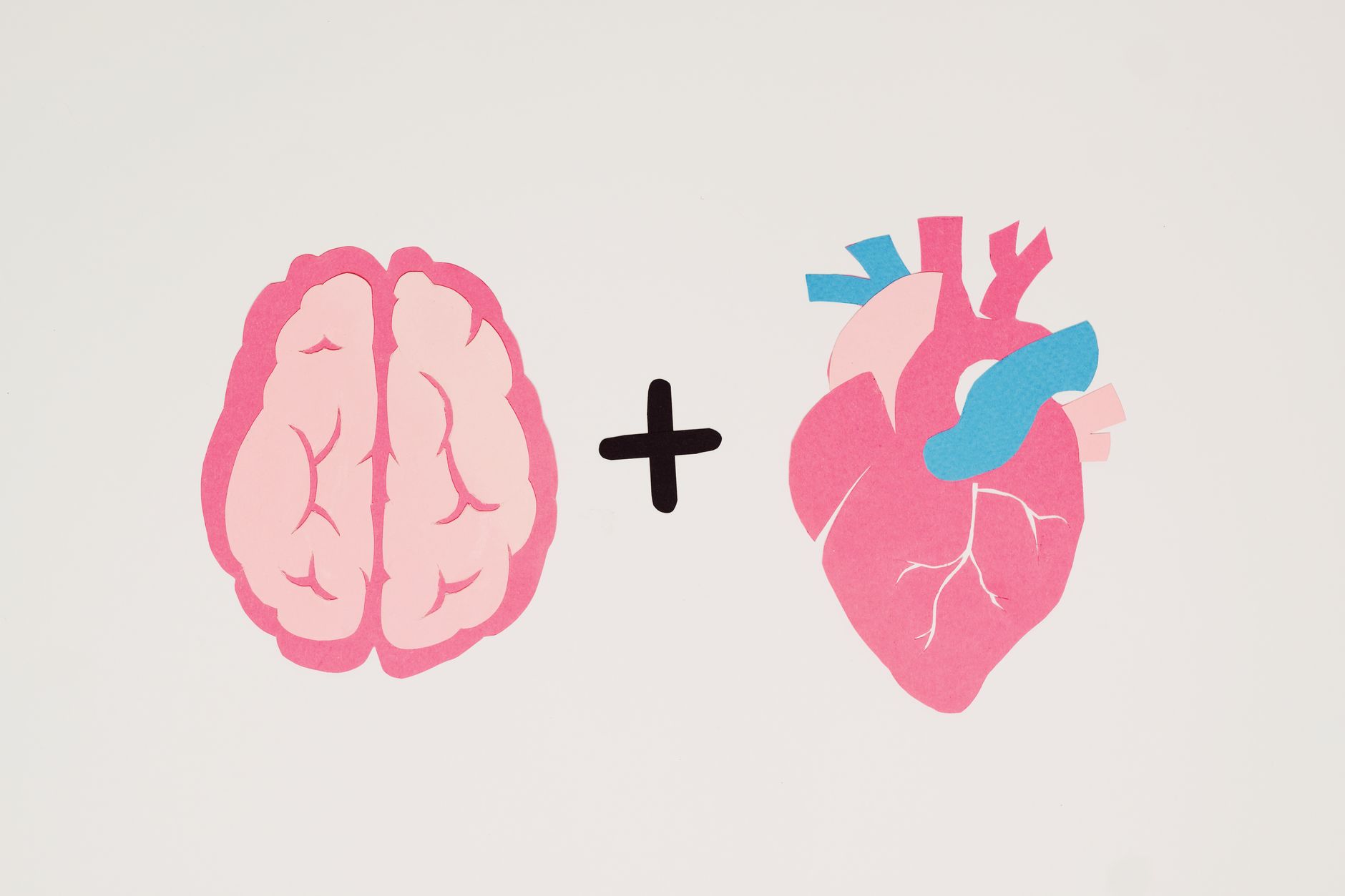
The research on embodied cognition suggests this model is wrong in ways that have direct consequences for professional practice. The mind does not operate independently of the body. Physiological state, arousal, fatigue, hunger, physical discomfort, the felt sense of threat, shapes cognition in ways that are not peripheral to professional judgement but constitutive of it. The body is not the delivery mechanism for the mind. It is part of the cognitive apparatus.
What embodied cognition means
Embodied cognition is not a single theory but a family of related positions, united by the claim that cognitive processes are not confined to the brain but are shaped by the body’s physical states, its sensorimotor experience, and its interaction with the physical environment. The field draws on the foundational work of philosophers including Maurice Merleau-Ponty, whose phenomenology of the body-subject argued that perception and cognition are inherently corporeal, we perceive and think as embodied beings, not as disembodied minds that happen to inhabit bodies.
The neuroscientific case for embodied cognition has been advanced most influentially by Antonio Damasio, whose somatic marker hypothesis proposed that emotional and bodily states are not separable from rational decision-making. Patients with damage to the ventromedial prefrontal cortex retained intact cognitive abilities, their reasoning, memory, and language were unimpaired, but lost the capacity to make effective decisions. The critical deficit was the loss of somatic markers: bodily signals that tag options with emotional valence, enabling the rapid narrowing of decision space that effective real-world judgement requires. Without the body’s input, rational deliberation alone was insufficient.
Stress, threat, and the narrowing of professional thinking
The most practically significant dimension of embodied cognition for professional practice is the relationship between physiological arousal and cognitive function. Under conditions of acute stress, the fight-or-flight response mediated by the sympathetic nervous system, cognitive resources are reallocated. Attention narrows to salient threats. Working memory capacity is reduced. Cognitive flexibility, the ability to consider multiple perspectives, hold conflicting information in mind, and generate novel responses, is impaired. The organism prioritises rapid, decisive action over deliberate, nuanced analysis.
These effects are adaptive in contexts of genuine physical threat. They are maladaptive in contexts that require the kind of complex, multi-dimensional professional reasoning that demanding professional roles require. And the conditions that produce physiological stress in professional settings, high-stakes decisions under time pressure, difficult interpersonal encounters, the management of distressing information, accumulated caseload demand, are precisely the conditions under which professional judgement is most consequential.
Research on stress and professional decision-making across clinical settings has found consistent effects: clinicians operating under acute stress show reduced diagnostic accuracy, greater reliance on heuristic shortcuts, and reduced attention to disconfirming information. The broader literature on physician burnout reviewed by Panagioti and colleagues in JAMA Internal Medicine documents systematic associations between clinician stress, burnout, and patient safety outcomes. The implication is not that stressed clinicians are failing as professionals. It is that physiological state is a variable in clinical performance that professional systems need to acknowledge and address.
The professional encounter as a dyadic embodied event
Professional judgements do not take place in isolation. They take place in encounters, between a professional and a client, patient, family, or colleague. And encounters are embodied events in which the physiological states of both parties interact.
The research on interpersonal synchrony, the unconscious coordination of physiological rhythms, movement patterns, and emotional states between people in interaction, has direct implications for how professional encounters should be understood. Practitioners who are physiologically dysregulated, aroused, fatigued, or in a state of stress, are less likely to achieve the kind of synchronised attunement that supports effective professional relationships.
George Lakoff and Mark Johnson’s influential work Metaphors We Live By (1980) demonstrated that conceptual thought is grounded in embodied experience, that abstract concepts are understood through bodily metaphors rooted in physical experience. The professional who describes a situation as ‘heavy,’ a client as ‘hard to reach,’ an organisation as ‘rigid’ is not merely using convenient shorthand. They are thinking through embodied conceptual structures that shape what is salient, what is possible, and what is appropriate.
Simulation semantics and understanding people
Lawrence Barsalou’s theory of perceptual symbol systems proposes that concepts are patterns of neural activation in sensorimotor systems, simulations of perception and action, grounded in bodily experience. To understand what it means for someone to be in pain, afraid, or confused is not to retrieve a definition. It is to run a partial simulation of that state in one’s own sensorimotor systems.
The simulation account of understanding has a direct implication for how professionals understand service users, clients, and patients. Empathic understanding is not a purely cognitive achievement. It is an embodied one. And it is an achievement that is impaired when the practitioner’s own physiological and emotional state occludes the simulation. The literature on vicarious trauma and compassion fatigue, reviewed comprehensively by Figley in Compassion Fatigue, documents the ways in which sustained exposure to the distress of others alters the practitioner’s own physiological and affective baseline. The consequences are not merely emotional. They include the degradation of the cognitive capacities, attention, working memory, cognitive flexibility, perspective-taking, that professional judgement requires.
What this means for professional practice
The practical implications of embodied cognition for professional practice are specific and actionable, though they require a shift in how professional effectiveness is understood.
First, physiological state is a professional variable that practitioners and organisations need to manage, not ignore. The practitioner who arrives at a complex home visit after six consecutive highly demanding appointments is not simply tired. They are cognitively diminished in ways that affect the quality of their professional judgement. Supervision that attends only to case decisions and not to the practitioner’s physiological and emotional state is attending to the output of the system while neglecting the condition of the system that produces it.
Second, the regulation of physiological state is a professional skill. The growing body of evidence on brief mindfulness practices, regulated breathing, and physiological reset techniques demonstrates that practitioners can learn to modulate their physiological state in ways that restore the cognitive capacities that stress impairs. This is not wellness advocacy. It is a cognitive performance argument grounded in the neuroscience of embodied cognition.
Third, the design of professional environments should reflect what the research reveals about the conditions for good professional thinking. Environments that are physically uncomfortable, visually cluttered, or designed for throughput rather than reflection actively impair the kind of reasoning they are meant to support.
Fourth, the professional encounter itself should be understood as a dyadic, embodied event in which the quality of attunement between practitioner and client is a significant variable in outcome. This is relevant across all professional disciplines that have historically understood themselves as primarily informational or procedural, law, social care, medicine, not only in therapeutic traditions.
The professional case for taking the body seriously
The claim that professional judgement is partly constituted by bodily states may seem to threaten the idea of professional objectivity. The better response to this concern is not to deny the embodied basis of cognition but to insist that recognising it is what professionalism requires.
A professional who operates as if their judgement is entirely independent of their physiological state is not being objective. They are being inaccurate about the conditions of their own cognition. A professional who recognises that physiological state is a variable in professional performance, and takes active steps to manage it, is doing what the evidence requires.
The research tradition from Damasio to Barsalou, and the accumulated evidence on stress, burnout, vicarious trauma, and interpersonal synchrony, constitutes a coherent and practically significant account of what professional judgement actually runs on. Taking that account seriously is not a departure from professional standards. It is what meeting them honestly requires.
Further reading
Damasio, A. (1994). Descartes’ Error: Emotion, Reason, and the Human Brain. Putnam.
Lakoff, G., & Johnson, M. (1980). Metaphors We Live By. University of Chicago Press.
Figley, C. R. (Ed.) (1995). Compassion Fatigue. Routledge.
Barsalou, L. W. (1999). Perceptual symbol systems. Behavioral and Brain Sciences, 22(4).