Exploring cognitive bias and the gap between professional intention and professional judgement.
There is a question that most professionals never ask about their own decisions: how much of what I concluded did I actually reason my way to, and how much was produced by processes I had no access to?
The research on human judgement, accumulated over fifty years of cognitive science, beginning with the foundational work of Daniel Kahneman and Amos Tversky, gives a consistent and uncomfortable answer. The majority of our judgements are not the product of careful deliberation. They are the product of fast, automatic, largely unconscious processes that are systematically biased in predictable ways. And knowing this does not, by itself, make us less susceptible to it.
This is not a counsel of despair. It is a starting point for a more honest account of what professional expertise actually consists of, and what professional decision-making actually requires.
Two systems, one outcome
Kahneman’s dual-process framework, popularised in Thinking, Fast and Slow (2011), describes two broad modes of human cognition. System 1 is fast, automatic, effortless, and largely unconscious. System 2 is slow, deliberate, effortful, and conscious. The critical point is not that System 1 is unreliable and System 2 is trustworthy. In familiar domains, with stable and informative feedback, fast pattern recognition can be highly accurate. What Kahneman calls ‘expert intuition’, the firefighter who senses danger before they can articulate why, the chess grandmaster who sees the winning move in seconds, is real, and it is the product of System 1 operating on genuinely reliable patterns.
The problem arises when System 1 operates in domains where patterns are misleading, where the environment does not provide reliable feedback, or where the situation is genuinely novel. And it arises when System 2, which should provide the check, is unavailable because we are tired, under time pressure, cognitively overloaded, or simply unaware that the situation requires deliberate analysis.
Most professional environments combine exactly the conditions under which System 1 is most likely to dominate and most likely to be wrong: time pressure, cognitive load, high stakes, and uncertainty. The professional who believes they are thinking carefully through a complex decision may be doing nothing of the kind.
The heuristics that shape judgement
Tversky and Kahneman’s original research, published in a landmark 1974 paper in Science, identified three heuristics, mental shortcuts, that produce systematic, predictable biases in human judgement. Fifty years later, their findings remain among the most robustly replicated in psychology.
The availability heuristic leads us to judge the probability of an event by how easily examples come to mind. A clinician who has recently seen a rare condition will overestimate its prevalence; a professional who has never encountered it will underestimate it. This is not irrationality, it is the reasonable operation of a shortcut that is often useful. But it produces systematic errors when the ease of recall reflects factors other than actual frequency: the vividness of an event, its recency, its emotional salience. The research on availability bias in clinical diagnosis is extensive, and the implications are direct.
The representativeness heuristic leads us to judge probability by how closely something resembles a typical case. A social worker assessing a family that resembles the pattern of cases they have previously associated with risk will rate that family as higher risk, regardless of what the base rates actually say. A lawyer assessing a case that resembles cases they have previously won will be more optimistic about its prospects than the evidence warrants. Representativeness produces premature pattern matches and, critically, the neglect of statistical base rate information that should be central to professional judgement.
Anchoring is perhaps the most counterintuitive finding. Estimates and judgements are disproportionately influenced by an initial value, even when that value is arbitrary, irrelevant, or explicitly acknowledged as such. A study of experienced judges found that those who rolled a high number on a die subsequently recommended significantly higher sentences than those who rolled a low number. A study of legal negotiators found that the party making the first offer achieved systematically better outcomes, because the first offer anchored the subsequent negotiation. In professional settings, the first diagnosis, the first assessment, the first figure stated in a meeting, all exert influence that rational deliberation should override but frequently does not.
Confirmation bias: the most consequential error
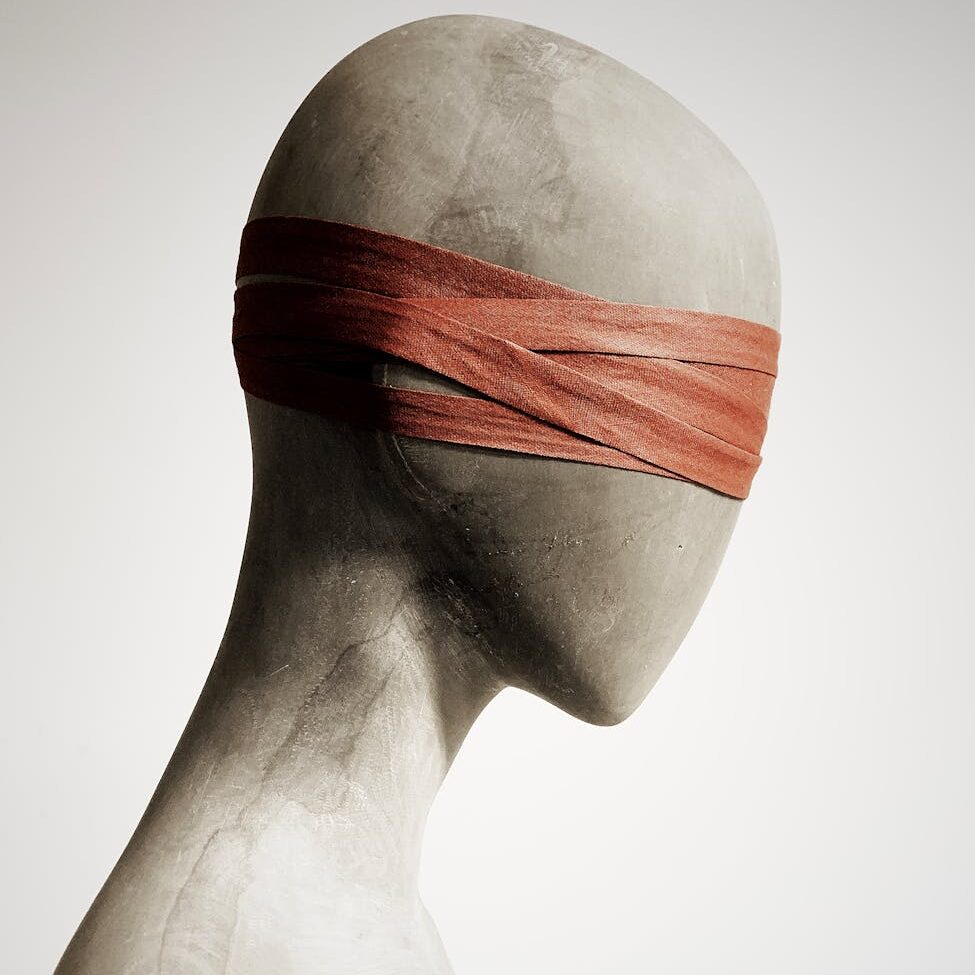
Of all the cognitive biases documented in the research literature, confirmation bias, the tendency to search for, interpret, and recall information in a way that confirms pre-existing beliefs, is among the most consequential in professional settings. It is particularly damaging in assessments that develop over time, where early impressions shape which evidence is sought and which is discounted. The pattern has been identified in child protection cases, in clinical diagnosis, in legal assessments of case strength, and in organisational strategy. In each domain, the finding is the same: once a professional has formed a view, they tend to find evidence that supports it and to explain away evidence that challenges it, without being aware they are doing so.
Eileen Munro’s review of child protection in England, published in 2011, identified confirmation bias, described as ‘assessment drift’ and ‘optimism bias’, as a recurring factor in cases where harm was not prevented. The analysis was precise: practitioners were not negligent. They were doing what human cognition does. They were fitting new information into an existing framework rather than allowing new information to challenge the framework. The problem was systemic, not individual.
The limits of awareness
The obvious response to all of this is: if professionals know about these biases, can they not correct for them? The research on debiasing gives a consistent answer: not reliably, and not through awareness alone. A review of debiasing interventions by Larrick (2004), published in the Psychological Bulletin, found that simply knowing about a bias produces modest reductions at best. Telling people to ‘consider the opposite’ or ‘think more carefully’ produces small effects that do not reliably transfer to real-world decision contexts. The most effective interventions are structural: checklists that prompt systematic consideration of alternatives; red-teaming and devil’s advocacy that institutionalise challenge; pre-mortem analysis that activates risk awareness before a decision is made rather than after.
This is a genuinely important finding for organisations and professions. The traditional response to poor professional judgement is individual training, tell people about biases and expect them to self-correct. The evidence suggests that this approach is insufficient. Structural interventions, decision protocols, mandatory challenge mechanisms, decision journals, calibration training, are more effective precisely because they do not rely on individual willpower to override cognitive processes that operate below the level of conscious control.
What this means in practice
The implications for professional practice are specific. First, the conditions that amplify cognitive bias, time pressure, fatigue, cognitive load, emotional activation, high stakes, are the normal operating conditions of most demanding professional roles. Understanding that these conditions make bias more likely is the first step toward designing practices that compensate for them.
Second, the most dangerous moment in any professional assessment is not the beginning, when uncertainty is acknowledged and multiple possibilities are held open, but the moment when an initial hypothesis has formed. From that point, confirmation bias begins. The professional practice of deliberately seeking disconfirming information, asking ‘what would I expect to find if my current view were wrong, and am I finding it?’, is not a counsel of perpetual doubt. It is a calibration mechanism.
Third, group decision-making is not a reliable corrective to individual bias. Groups introduce their own cognitive risks: groupthink, authority gradients that suppress dissent, information cascades in which later speakers defer disproportionately to earlier ones. A multi-agency meeting that converges rapidly on a shared view without genuine challenge is not evidence of consensus, it may be evidence of a process that has produced the appearance of deliberation without the substance.
Fourth, and most importantly: the goal is not perfect rationality, which is neither achievable nor, in all circumstances, desirable. The goal is calibration. Knowing the conditions under which your judgement is most likely to be wrong, and having mechanisms in place that reduce the consequences when it is. The work of Gerd Gigerenzer and others has usefully complicated the picture: heuristics are not merely error-prone shortcuts. In many environments, they are the most efficient way to reach good decisions. The question is not how to eliminate fast thinking but how to know when it is serving you and when it is not.
Professional expertise, on this account, is not the replacement of intuition with analysis. It is the development of the metacognitive awareness to know which mode of thinking a situation requires, and the professional structures that support the right mode being engaged.
Further reading
Kahneman, D. (2011). Thinking, Fast and Slow. Farrar, Straus and Giroux.
Munro, E. (2011). The Munro Review of Child Protection: Final Report. Department for Education.